July Update
Chronologically, it sounds funny: I experienced heartbreak, but it felt good, then I went on vacation and it was great, also I met a bunch of friends which was also great, but I also got quite sick which sucked, and also an awesome guest visited in Amsterdam, and my doctors are helpful, and I was on a boat!
Funny, but reads awful. That’s why nobody really tells stories in chronological order! Lol. (Also it’s when an old fart like me uses “lol” non-ironically in prose that you know that “lol” is not cool anymore for the younger kids. Lol again. 🤣)
Anyway.
❦❦❦
A lot of the things that happened this month feel pretty important. In hindsight, each experience makes me feel somewhat different today than I was just a few weeks ago. July was big.
However, if I consider the overall story arcs of the entire year, one particular happening feels more impactful than the rest: a lovely romantic weekend at the beginning of the month. That particular story was very short: it lasted only three days! A proverbial summer romance, followed by painful heartbreak. Yet, during those three days, I experienced a spectrum of emotions I did not remember I was able to feel, and was able to look at the future in ways that I did not remember I could, and all these things felt very good.
In a way, my reflections from June had left me a little perplexed: I was on the verge of believing that I lost the plot and didn’t really know how to engage on the topic of romance anymore. It only took these three summer days to reset my beliefs about myself and look forward to the next episode with a mix of anticipation and joy.
❦❦❦
While I was processing my heartbreak, I headed east to Romania and Bulgaria. My main summer vacation plan was hastily put together in the last part of June, and prior to the first leg of my trip I barely knew where I would sleep, let alone what was there to experience.
I first headed to Sofia (София), capital city of Bulgaria, after a short connection in Bucharest. Originally, Bulgaria was planned as a side trip; I had been attracted by the prospect of meeting two friends there (more on this below). Knowing what I know now, this was an error in judgment: Bulgaria deserves far more attention than a few rushed days.
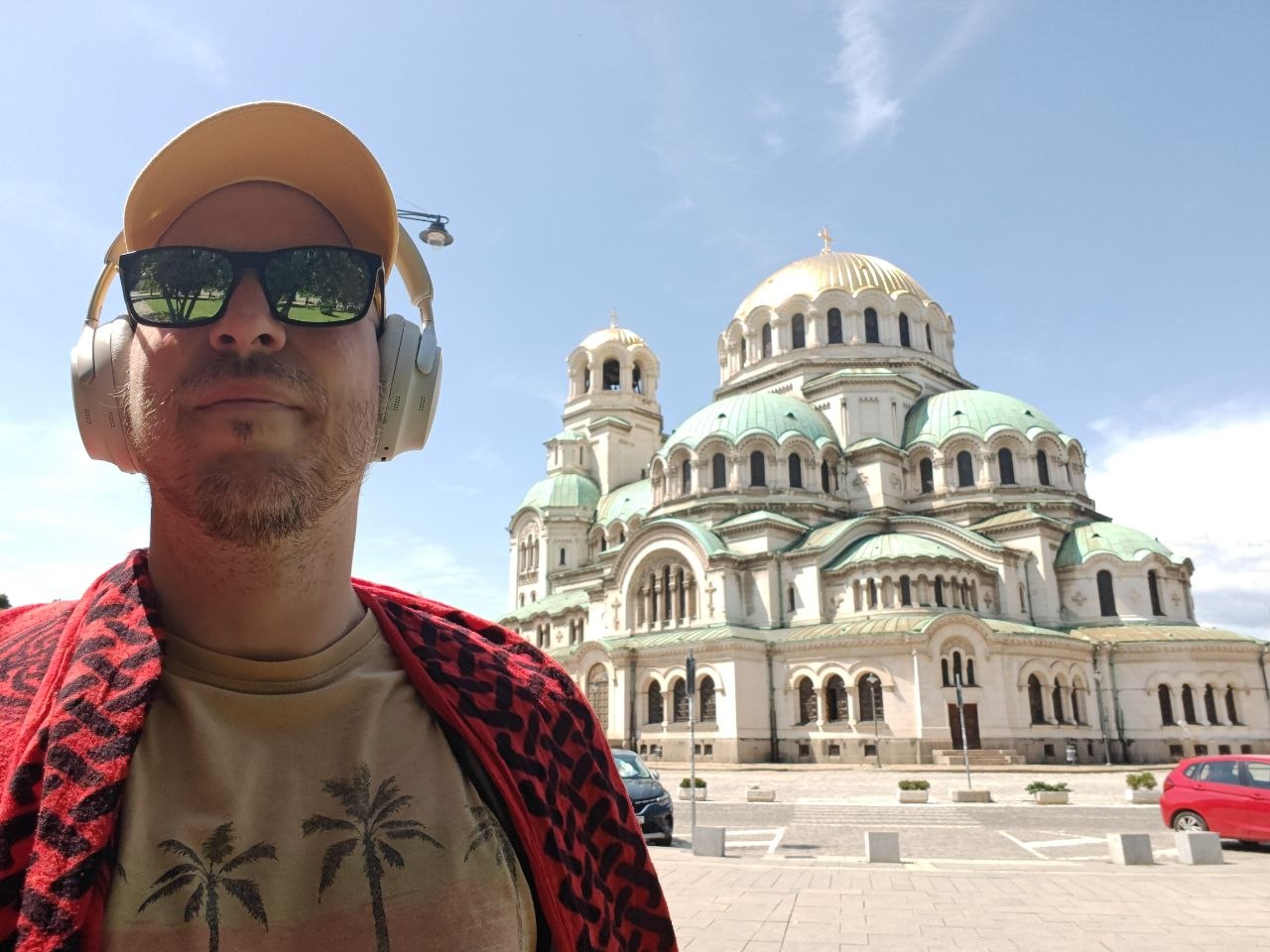
My first day to Sofia: I went to (see the) church.
What makes Bulgaria unique in Europe is its blend of historical Roman, Greek and Ottoman cultural influences, together with the still strong presence and influence of the Orthodox Church.
Knowing only high level facts about the Bulgarian economy, I had expected a city with poor infrastructure, difficulty of finding my way around and perhaps struggles in finding good food and drinkable tap water. All these expectations were completely wrong! Sofia is a booming city with a working infrastructure, absolutely delicious food, and friendly and ambitious people all around.
I was initially a little anxious about not knowing how to read Cyrillic; thankfully, everything was translated and everyone I met was nearly bilingual with English. Bulgaria adopted the Euro in January this year and all businesses now accept contactless payments.
I was especially charmed to see the younger generation walking around and gathering at dusk to spend time together socially. I had only seen this previously in Tallinn last month; it is very far from what younger folk do in Western Europe nowadays.
From my home base in Sofia, I also organized a short road trip. The overall experience of renting and driving a car in Bulgaria have furthered and strengthened my opinions that Bulgaria is underrated. Rentals are frictionless, driving is pleasant (& other drivers well-behaved) and the forests alongside the highway are breathtaking. I even watched a documentary explaining that a new “high speed” train is planned between Sofia and Plovdiv for some time in the next couple of years.
My drive brought me to Plovdiv (Пловдив), one of the oldest cities in Europe—the area has been inhabited for the last six thousand years. Plovdiv is somewhat smaller than Sofia but completely catches up with how much culture can be seen as much as experienced. There are numerous Greek and Roman ruins visible throughout the city center, alongside more modern construction. We can even walk among and on top of them in most places! Also, one of the Roman amphitheaters has been built and rebuilt throughout history and is still being used today. (It is also, I’ve learned since, the economic capital of the country.)
I was meeting two friends in Plovdiv and one of them took the initiative to study the history of the city a little bit before my arrival so he could play the role of a guide. His enthusiasm to show me stuff motivated us to walk all around the city despite the scorching heat, far further than I would have agreed to if I was on my own. 😅
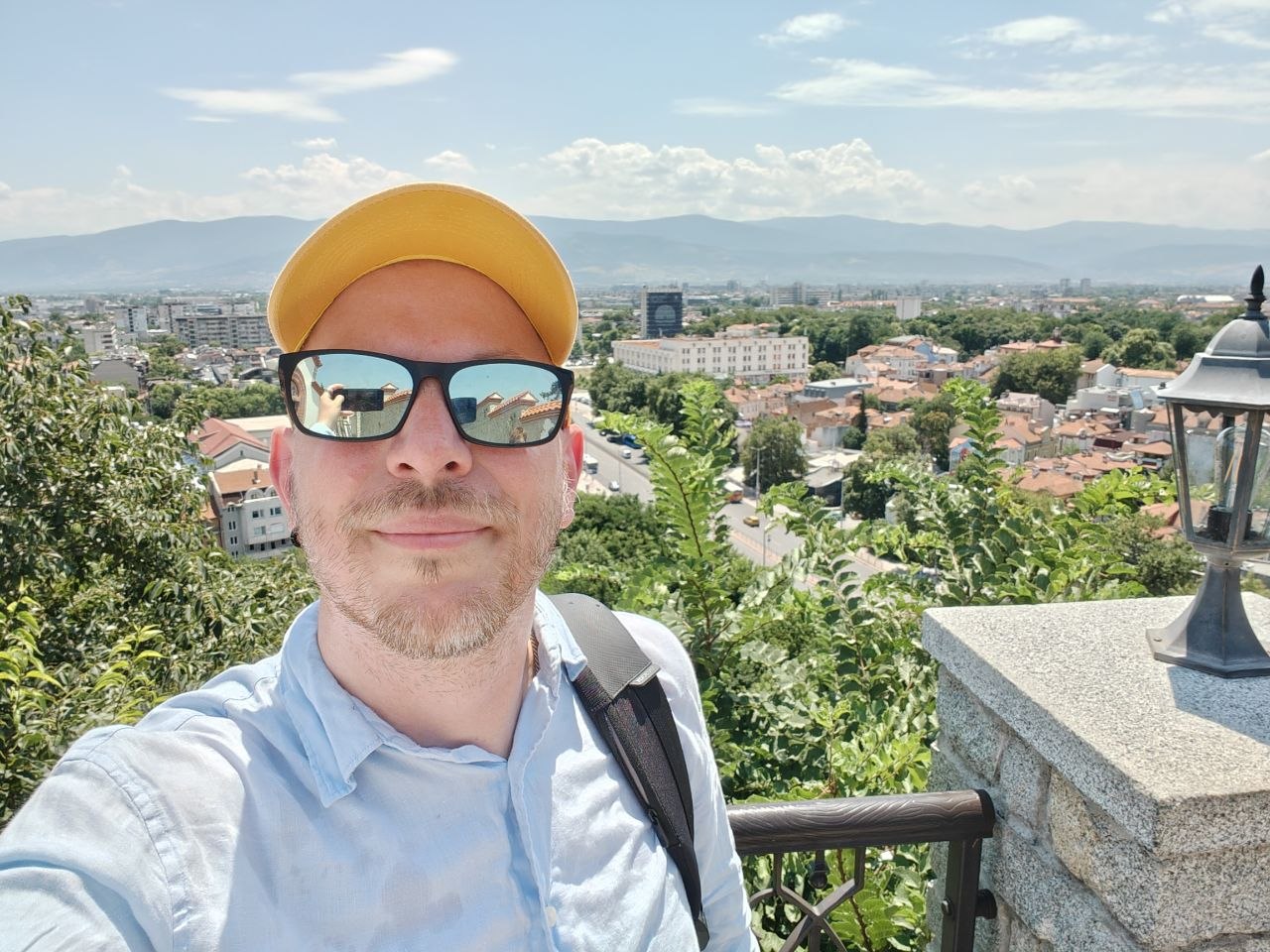
Plovdiv old town oozes history. Its hand-decorated house facades are unique and impressive. Amazing, beautiful all around.
For context, despite all my travel experience I have not yet visited ancient sites in Italy nor in Greece. So for me, Plovdiv was my first in-person contact with antiquity. Even though, rationally, a couple of carved rocks from thousands of years ago are just… rocks, I now understand at a deeper level how touching those rocks with our own hands can make us reflect quite deeply on our personal contributions to history.
Meanwhile, I also felt as if the Bulgarian people I met outside of Plovdiv do not consider it to be very important. But the friends I met in Plovdiv, in contrast, are very proud to live there and are quite conscious of how unique their city is. I’ll certainly go back.
❦❦❦
After a short week in Bulgaria, I headed up to Romania, to my home base in Bucharest. My initial reasoning was that Bucharest is a very large city and that I would need an entire week to comprehend it. However, everyone I talked to before, as well as a friend I’ve met there on the first day, insisted that Bucharest was not so pleasant to visit and that my trip to Romania would be unsatisfying unless I would also head north to Transylvania / the mountains.
This is how, after two days in museums inside Bucharest, I found myself on a train to Brașov.
❦❦❦
I had expected the train itself to be an adventure: my initial plan was also to rent a car and drive there, but I was discouraged by my friends from trying to drive around Bucharest, citing safety reasons. I had my own doubts about the Romanian train service, but in the end I was wrong again; both surprised and relieved that the service between Bucharest and Brașov is in fact quite comfortable, cheap, frequent and on-time. The views of the Transylvanian forest from the train are also completely unbeatable. Overall, this ride (and its return leg) made me happy in ways I hadn’t realized I needed.
Brașov itself was also idyllic. For context, throughout history, the south of Romania was mostly under Ottoman/Roman influence, whereas Transylvania (and the north of Romania overall) was under German influence. This translates to a completely different architecture and approach to urbanism. If it was not for business names in Romanian, I would have felt I was somewhere in Eastern Austria or Southern Hungary. (Which, historically speaking, I would have been in the past!)
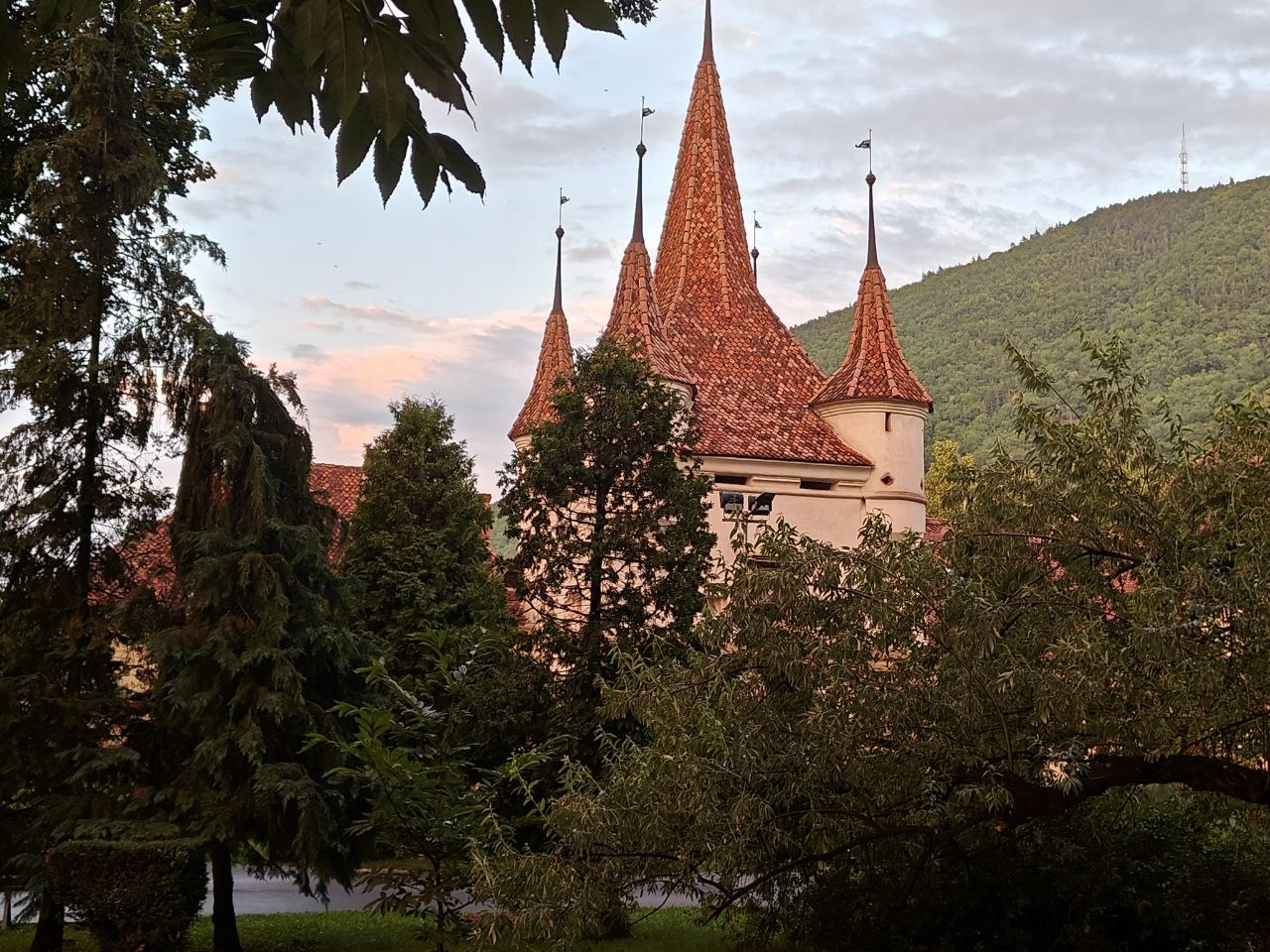
Brașov also has medieval walls, castle towers and castle-ish buildings, and many pointy spires.
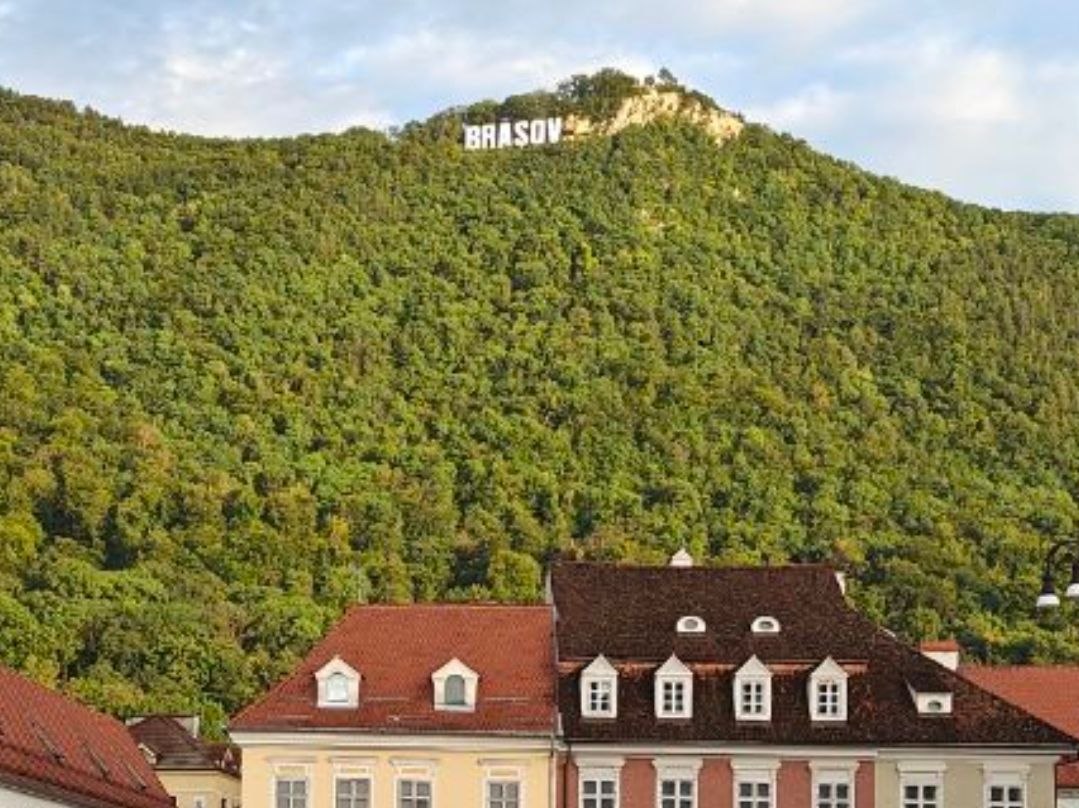
For some reason, it also has a sign on the hill, like in Hollywood.
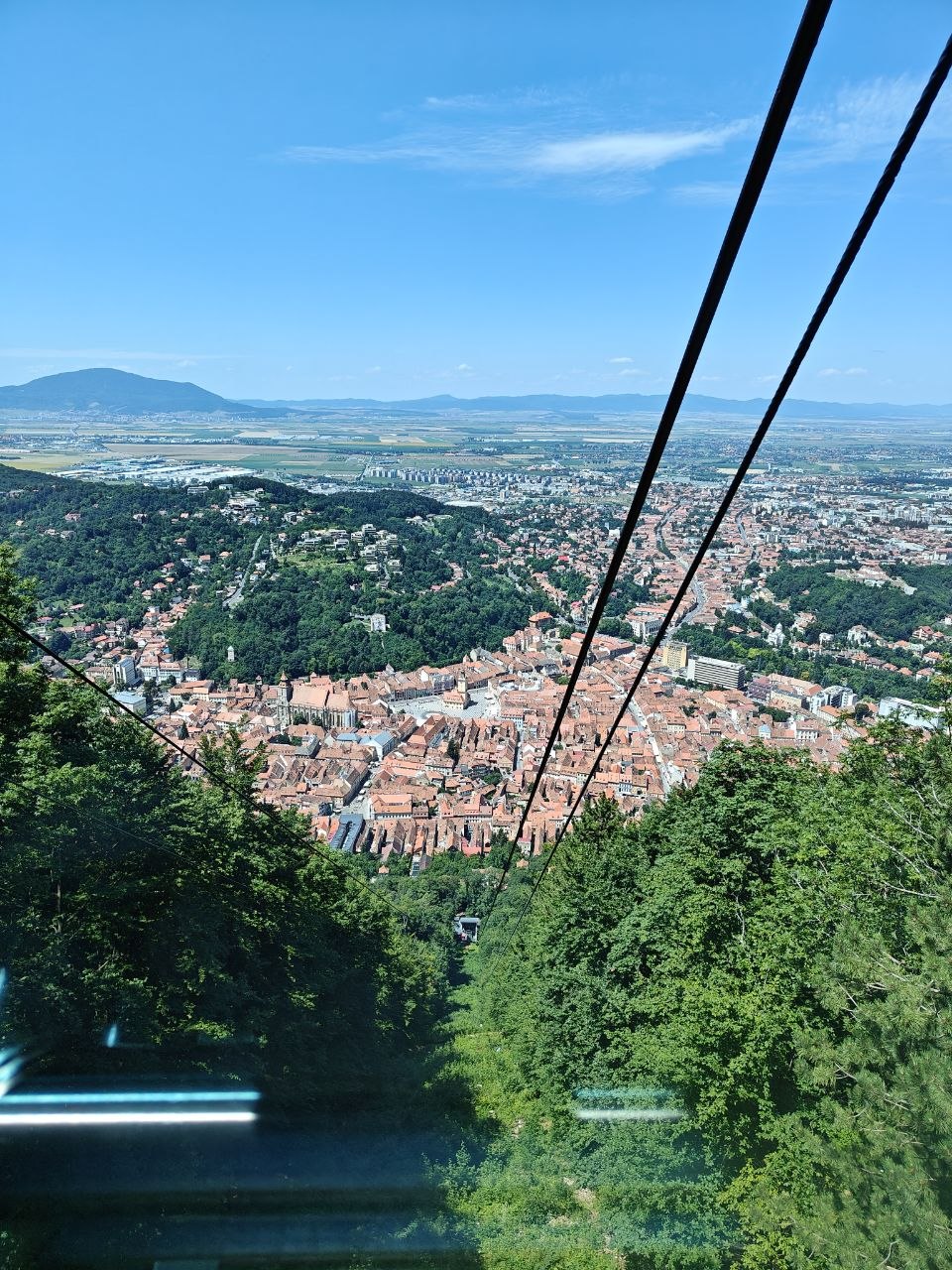
I climbed up the Tâmpa hill with the cable car and hiked down on the other side. Again, the forest was fantastic.
Although my stay in Brașov was also short, I was able to make it count thanks to the graceful help of a friend whom I met there and who agreed to be my guide. Together, we walked around the city and visited most of the interesting spots. I was also able to ask him all my questions about the city, its history, and the interests and challenges faced by young(er) Romanians who are not living in the capital.
From a tourism perspective, I feel I saw most sights that Brașov has to offer. I still would like to come back, though: it seems like a perfect spot for a resting holiday in the fall.
❦❦❦
Having traveled back from Brașov, I spent some more time in Bucharest. Also accompanied by a(nother) friend, I discovered more sides to the city than at first; overall I would say it was much less boring than I was told it would be.
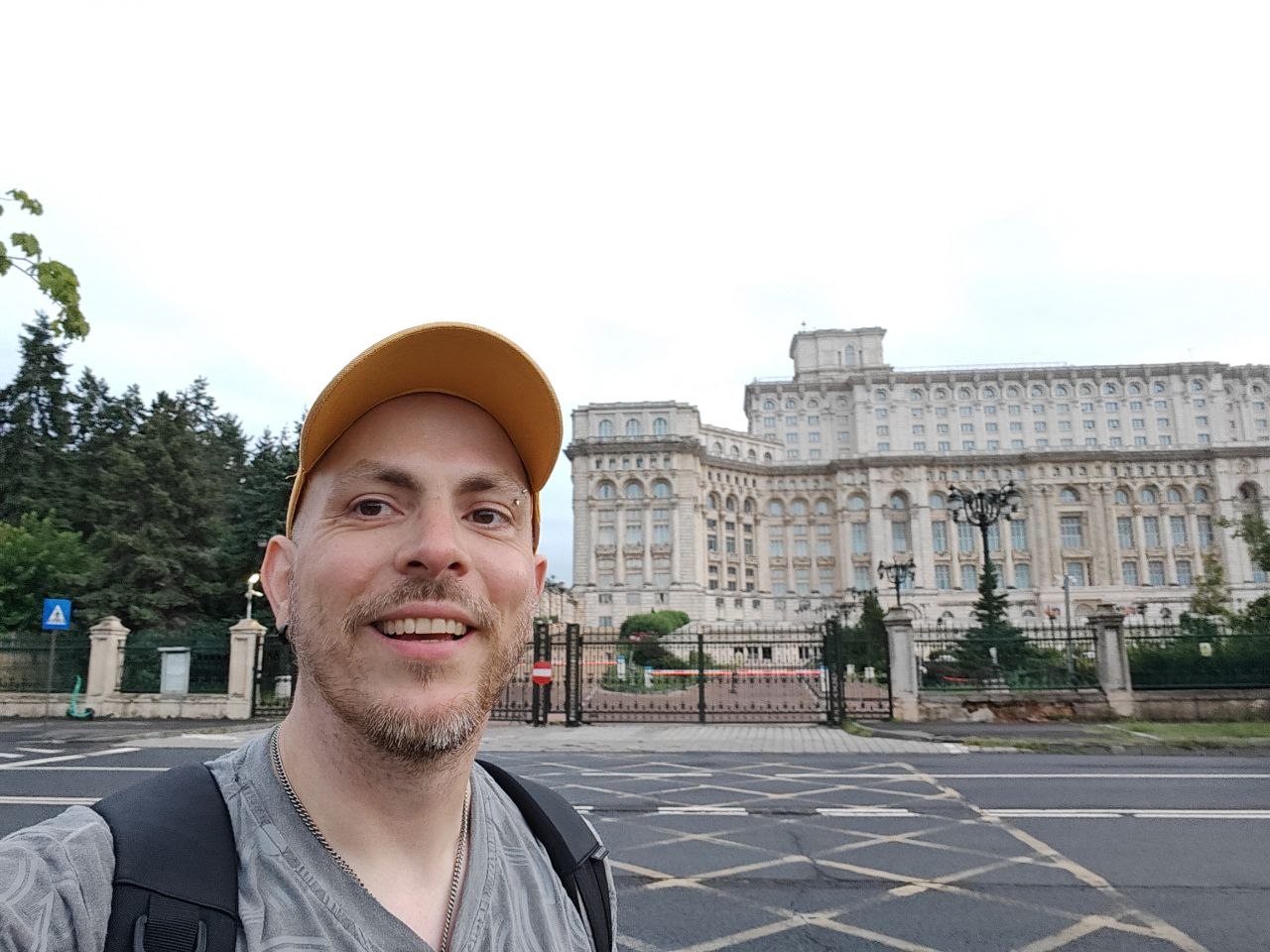
The government Palace is a bit “too much” in ways that only Communist regimes knew how to build. But it is well-maintained and people still use it, so I’m ok with it.
Like Sofia, Bucharest also contains large parks where the younger generation gathers and spends social time together. This too felt good.
❦❦❦
Like in other parts of Europe, we also experienced a heat wave in the Netherlands. I came back home to a partially scorched lawn. Given how much effort I put into it this year, it felt like a setback.
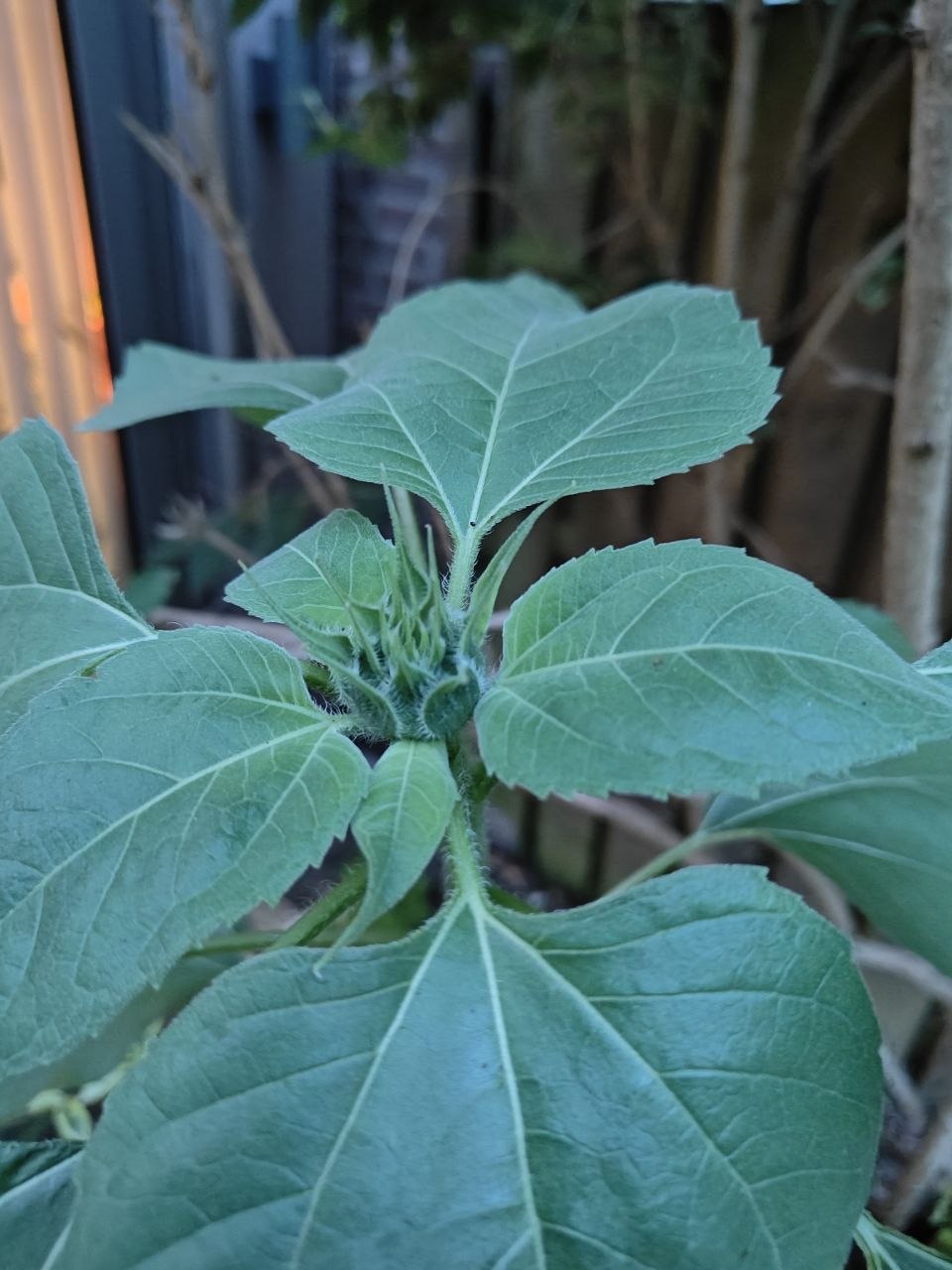
On the other hand, the sunflower that my friend gifted me last month is still doing its thing. Can’t wait to see how it comes out!
❦❦❦
The vacay was overall a success; after just two weeks I felt like I had been away for a month. The one thing that kept it from being completely perfect is that I got sick in the middle of my trip. The main symptoms appeared suddenly after a few days in Bulgaria: it looked like I caught a severe cold, with stomach cramps. This was surprising: the temperature outside was tropical, and the air conditioning inside, limited. Nevertheless, I was partly bedridden for two days, and the rest of my trip, albeit wonderful, was a constant struggle between my mind (do things! see things!) and my body (let’s stay inside and horizontal). The mind won most of the time, but I took a beating.
The stomach cramps, namely, had started a few days before the onset of the cold symptoms, and persisted even after my airways started to clear. So much so that I still felt quite ill when I came back home, and solicited help from a doctor. For unrelated reasons, I ended up talking to three medical professionals in a short period, and finally heard from one of them that my ailments may actually be caused by a stomach infection; maybe something I caught from the water during my trip. This was more than one week ago; I since received some initial medical treatment, but the lab exams are still ongoing to decide whether I should also take antibiotics.
Coming back home sick was not glamorous, and it was also inconvenient, as I only had a few days before receiving a visitor from abroad. Thankfully, most of the pain had subsided when my visitor showed up.
❦❦❦
This is a good moment to share some things about my social life last month. For context, usually, I travel either solo and figure out what I want to do and how to do it, on my own; or I travel together with friends and we experience the entire trip together. This time was different.
Only one of my vacation days had a clear plan in advance, to meet with a long-time friend on a pre-arranged schedule. For the rest, I had not planned anything but also wanted to not be alone.
Two different things happened. For one, in each destination I used some online matching systems to connect with locals and ask for recommendations. This is how I chatted with dozens of people, and met three of them in-person. This is also how I got the push to travel to Brașov, and how I found my guide there.
The other thing is that I took the opportunity to meet several of the folk I’ve been mentoring in the last two years. For context, this online community where I’m volunteering has members from all over the world, and a significant fraction of them is spread throughout Europe. It just so happened that I was able to meet four of them during those two weeks abroad: one in Sofia, two in Plovdiv and one in Bucharest. All of them agreed to accompany me in my exploratory adventures, and I am still grateful for the quality time together and the opportunity to get to know them better.
So overall this vacation was highly social. Meeting and spending time with so many folk added layers to my travel experience, and made it easier to temporarily ignore my physical ailments. Moreover, meeting folk from my online community in-person added layers of connectedness to our online conversations since then. All this feels good.
Finally, it’s now been a few times that I went out of my way to meet folk from the online group in-person; I’ve started to notice that every time I tell them about the benefits of the experience some of them also get the idea to travel on their own and connect in-person between each other. It already has made the group tighter. I like this part of community-building a lot.
❦❦❦
This is also how it came to be that one of my community members decided to travel through Europe. This is someone whom I started talking to weekly about two years ago; at the time, he was struggling with some commonplace teenage challenges.
While I immediately accepted when he asked to make my home his first home base, I did develop beforehand a mild apprehension about hosting a technically-adult, still-teenager person; rationally I was expecting possible challenges stemming from his lack of experience with travel and functioning independently from his parents. Thankfully, unbeknownst to me, he had matured into an active, engaging, enthusiastic, well-mannered and ambitious person, and thus his visit brought much joy and no worries at all. We also discovered a deeper connection through important shared life milestones we hadn’t had an opportunity to discuss earlier. Moreover, watching my city through his eyes was refreshing; it helped me appreciate more of the little things that make our life comfortable and interesting. I could get used to this! I was even a little sad when he left to continue his journey onward to Berlin and Prague last Saturday.
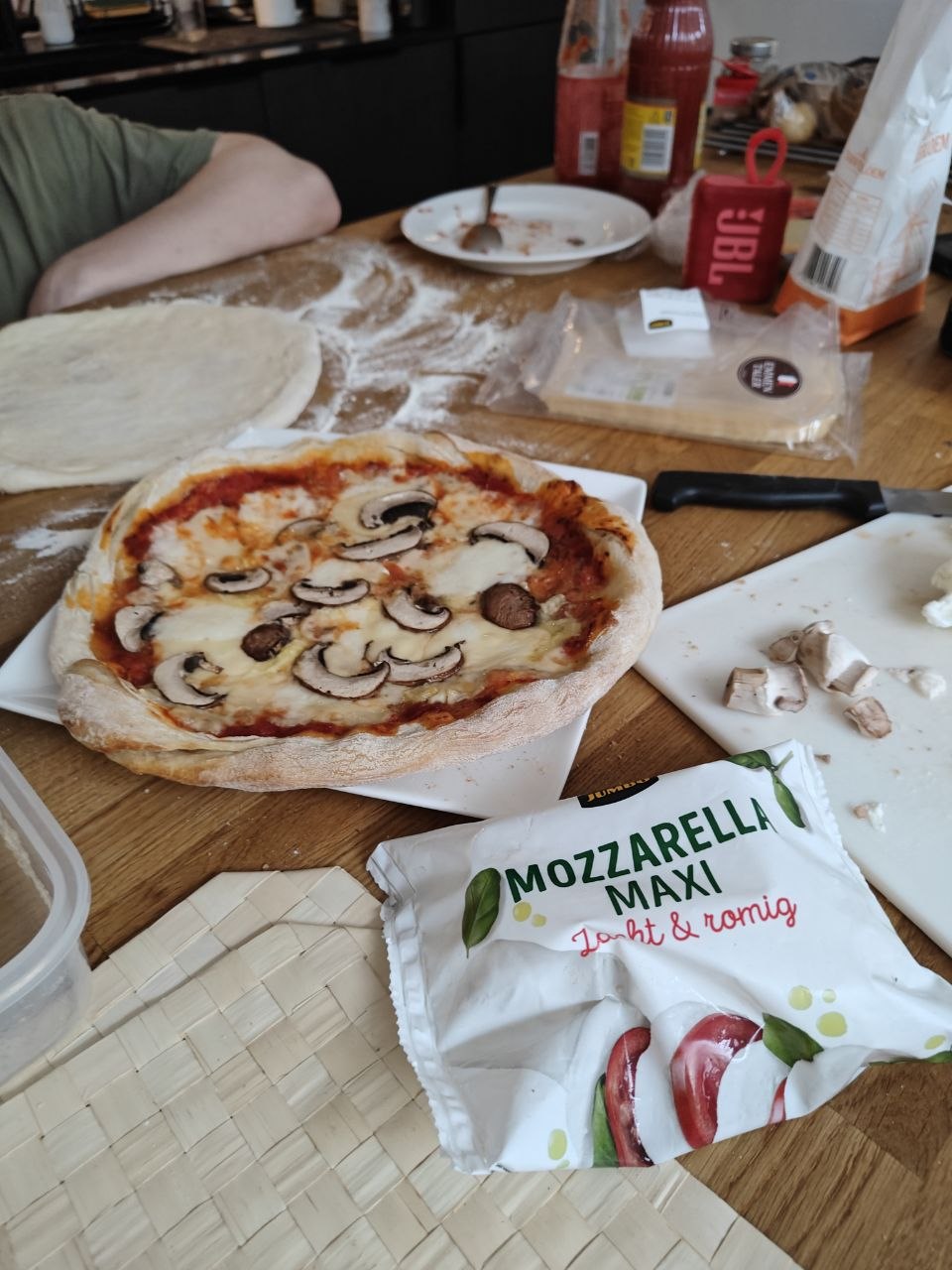
He baked pizza for us two. His were by far the most delicious pizzas I’ve eaten through the entire year.
❦❦❦
This reporting period gloriously concluded with the famed Amsterdam Canal Parade last Saturday: I was invited on one of the floats! My town sponsored a spot in the parade in honor of its eight hundred years anniversary, and a good contingent of colorful folk, including me, staffed the stage. This was a four hour parade experience, followed by three hours of “sailing” back from the center Amsterdam to my town nearby.
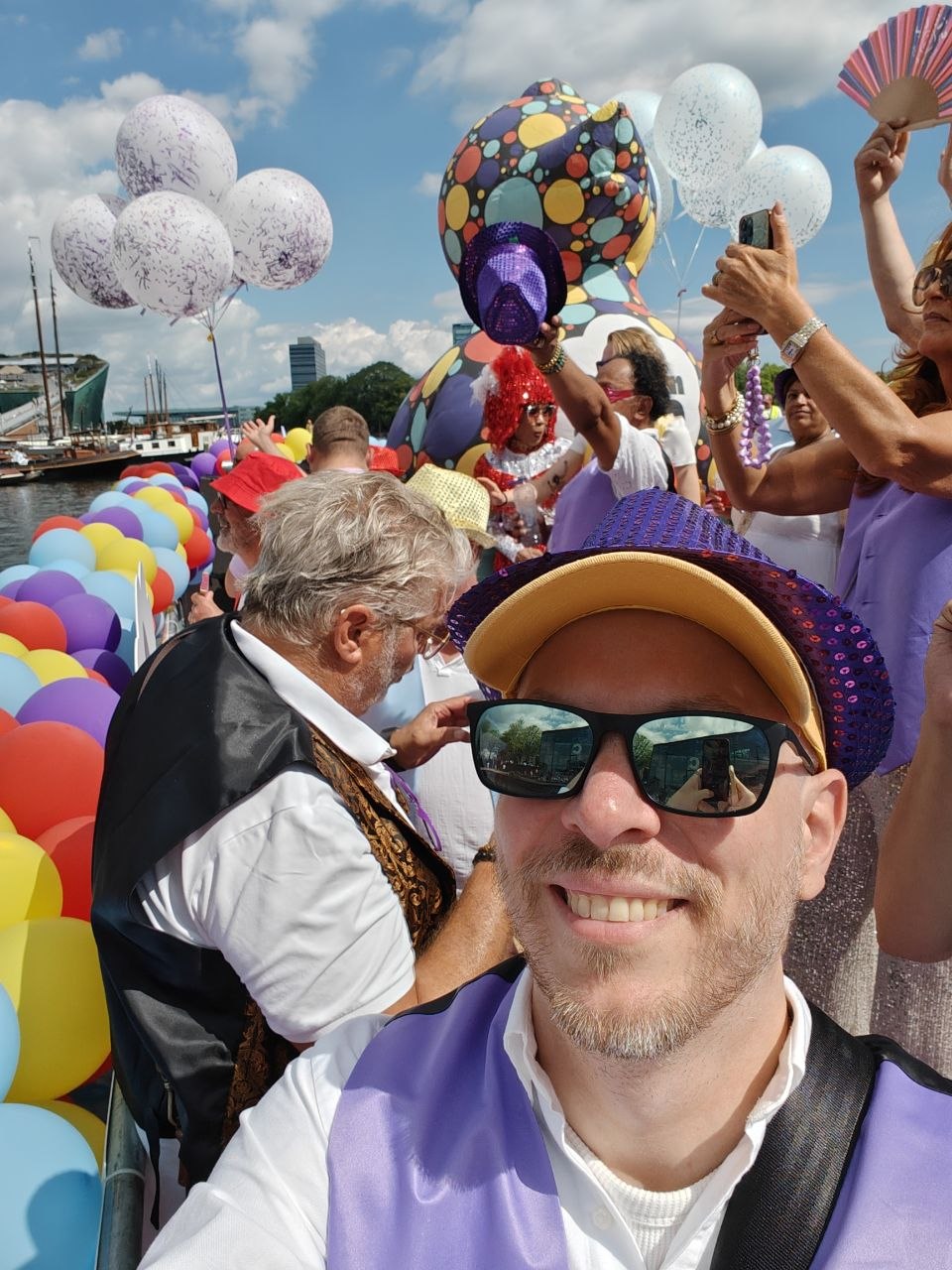
The invitation was issued to me as a council member, but it was also a long dream of mine. The experience is unforgettable. The part that I found particularly heartwarming, and that will likely stay with me the longest, was to see all these tens of thousands of people alongside the canals, cheering us on throughout the afternoon. While I “knew” in the abstract that folk are generally supportive around here, this experience made this knowledge far more visceral. I am still basking in its afterglow.
❦❦❦
On the work front, obviously on account of my vacation I chose to shift my focus away from my main project temporarily. I wasn’t idle however; in-between travel adventures I found some time & energy to build two small apps.
One is a food tracker: one of my summer project is to track what I eat, and I wanted specifically a program able to take note of my meals through my Telegram client. It’s very custom, I might use it for only one month more, and I probably won’t publish it.
The other app, in contrast, feels like it has more potential: I built a simulation tool for the benefits of using a home battery on my energy usage and costs. It reads my consumption data automatically from Home Assistant then shows me what I would gain by adding a battery. For example (last 6 months, screenshots only):
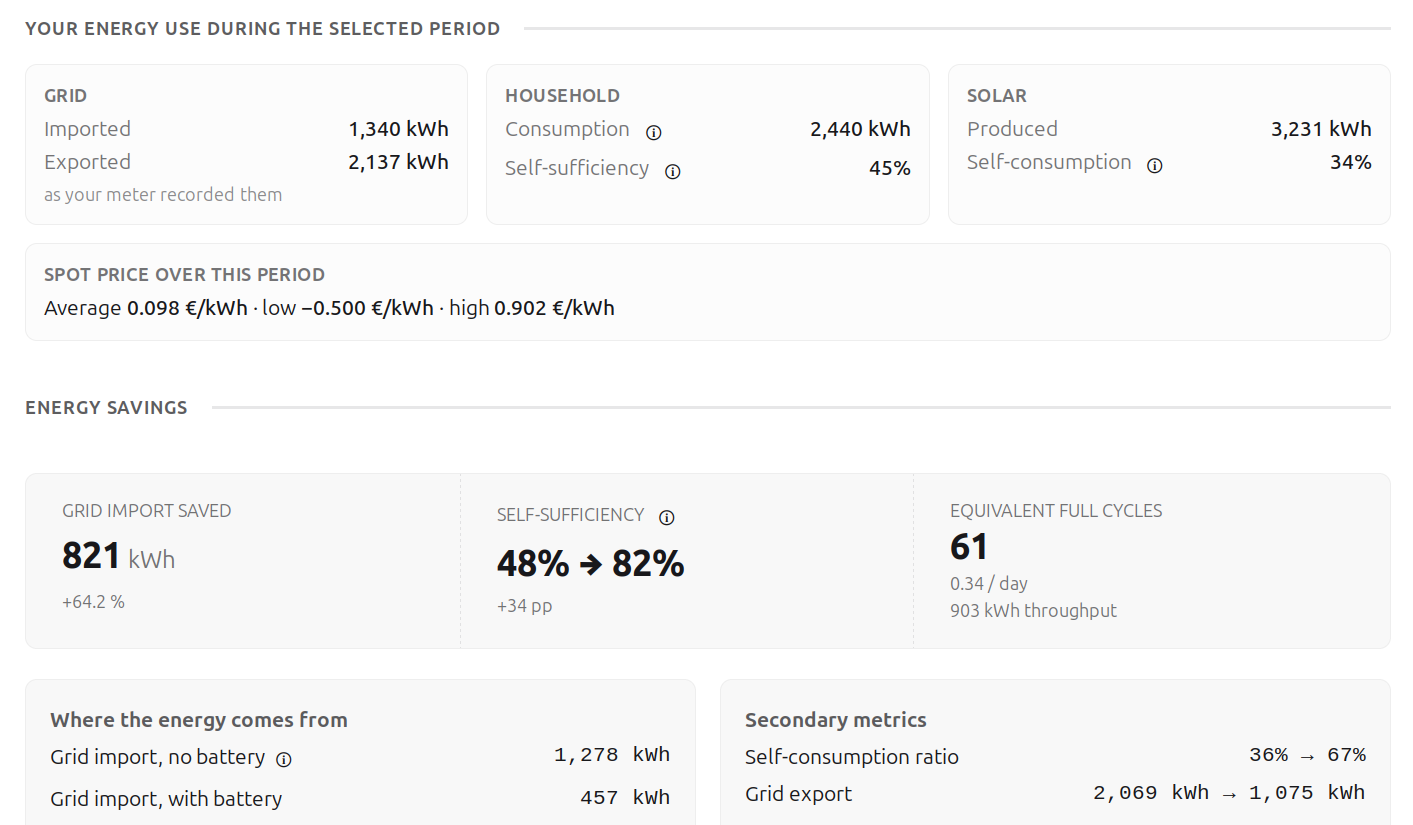
These are just estimates, but they align well with what I was also able to compute on another simulator elsewhere.
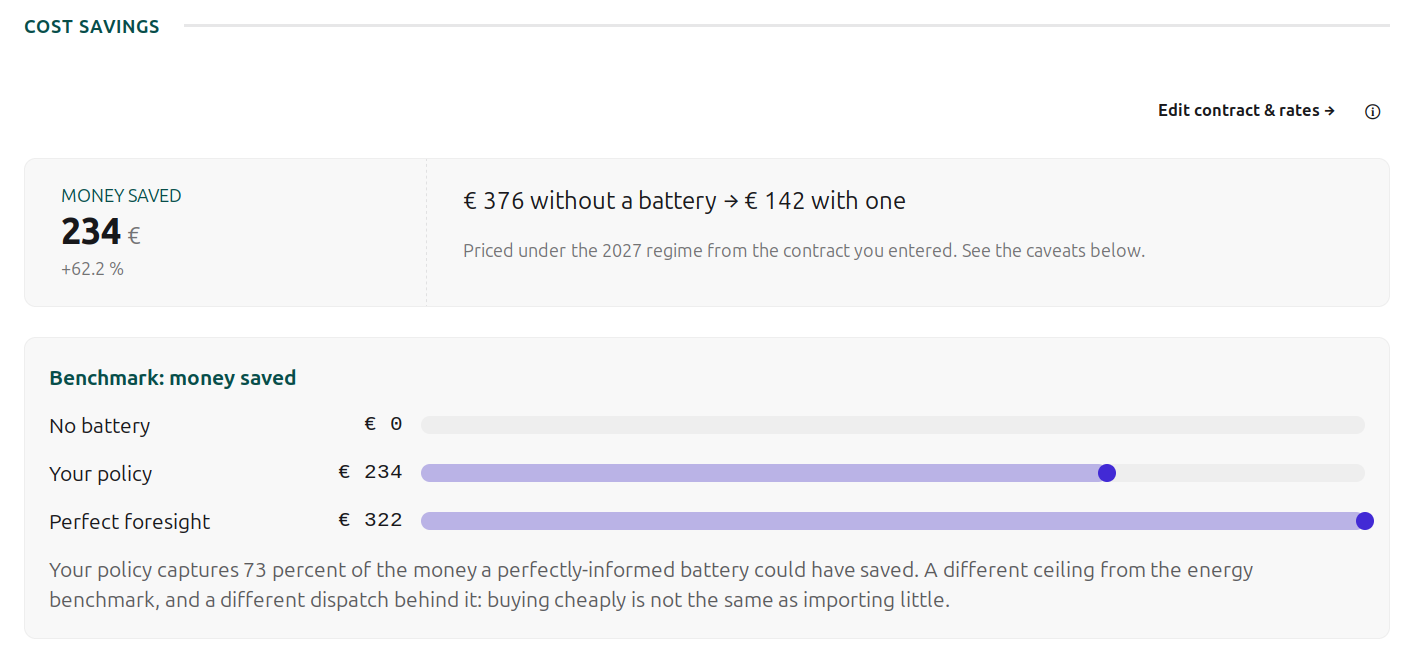
Again, just simulations. But I can quickly explore different battery parameters.
Overall, it helped me learn/confirm that it would be hard for me to make a battery work in my home, financially (i.e., break even on cost when taking installation into account). Also I’m not sure yet I want to throw money at it as a hobby either.
However, meanwhile, this little app looks generally useful. After I built this, I found another guy built something slightly different but with some overlap at jeroen.nl. There seems to be demand for this kind of tooling where I live, so I’ll consider making it public.
❦❦❦
Perhaps surprisingly, I was also able to fit a good dose of reading in parallel to all my work & adventures.
One book in particular entertained me greatly:
- Never Split the Difference: Negotiating as if Your Life Depended on It - Chris Voss & Tahl Raz
- I initially picked it up because of its good ratings, expecting to learn a few things about sales techniques. It is far more than that however; it talks about all the ways we can set up partnerships with others and build win-win situations. It also covers building and maintaining trust, the fundamentals of good communication, and what it really means to properly listen to someone. I started the first chapter expecting to skim every few pages, and found myself instead reading deeply and coming back to earlier pages a few times to ensure I fully understood each point. This book is a gold mine.
❦❦❦
On the topic of organizational science, the following article resonates with my own experience: The social physics of conversation: Communication patterns matter by Andi Roberts. This analyzes the criteria that make overly structured communication inside corporations less effective, and discusses several strategies to work against that. In a nutshell, less structure and more communication outside of management-monitored channels leads to better collaboration and more productivity. Who would have known?
❦❦❦
My vacation time also included stepping further away from technical topics, so I purposefully avoided LLM-related content. Two good things caught my eye however.
In What will be left for us to work on?, Arvind Narayanan collates numerous small gold nuggets of wisdom from the past two years, and depicts a practical roadmap to a better integration of LLMs in our work and social life. I liked the combination of pragmatism, realism and optimism. (Related: this Stanford article by Neale Mahoney et al. contains some supporting numbers.)
Complementarily, in The Private Capture of Public Genius Cameron Armstrong recaps the various ways in which LLM creators (Anthropic, OpenAI, etc.) are exploiting public goods and develops a carefully constructed argument in favor of a “Corpus Royalty”: a public tax on LLM-related revenue to compensate the authors and creators whose work was used to train the models. While his proposal is specific to the US, the overall structure of the argument applies globally. The author may believe he’s merely making a proposal; I personally believe this is a prediction. We will get there before long.
❦❦❦
Meanwhile, multiple times this year, I have been reporting on the steady drip of news and scientific results about how social media and digital devices are making young people dumber and generally hurting their generation. This month, I was happy to read Schools across America are quietly admitting that screens in classrooms made students worse off and are reversing years of tech-first policies (reporting by Marco Quiroz-Gutierrez), which quietly and clearly explains how and why the schools are doing what the title says.
Another side that is less reported on, but equally important, is the negative impact of the parents‘ device use on the well-being of their children. I read “Mommy, do you love your phone more than me?”: Parental device use and the adolescent-caregiver attachment bond by Don Grant et al., and it gave me a cold sweat when I realized most of the people I know with children are very close to the situations depicted here.
❦❦❦
The last bit of news I’d like to share is probably the biggest & most unreported macro-economic news of this year, and perhaps this decade: how China quietly saved the world last month, explained by Max Fisher.
In a nutshell, while the supply of oil was choked in Hormuz the Chinese government quietly released some of its unbelievably large strategic reserves on the market to avert the likely economic shock of the US-Iran war. The action was likely self-serving (their economy is export-driven, and they need their customers—us—to continue buying) but it likely helped us avoid a gigantic crisis.
❦❦❦
To wrap, two little bits of happiness.
One is the adorable Costasiella kuroshimae. Its unique feature is that it is the only (known) animal able to use photosynthesis to obtain energy. It is also incredibly cute.
The other is this very short manifesto by Ben Landau-Taylor: If You Build It, They Will Come. Salient bit:
Lots of people have a sort of consumer attitude towards their communities, where they take everything for granted. I saw things this way when I was young. A social scene is an automatic feature of the world that appears on its own, like a wild blueberry bush. It starts sprouting parties and dinners and conferences and reading groups as naturally as the bush sprouts berries. […] Surprisingly, it turns out things don’t actually work that way. In fact, events happen when someone puts in the legwork to organize them. And one of the most reliable laws of the universe is that, if something takes a little bit of legwork, then most people just won’t do it. […] I’ve come to believe that part of today’s problem of social alienation is a problem of too many free riders. […] don’t know how to solve this undersupply at the scale of society. But you can solve it at the scale of your own community by just supplying it.
Let’s do it!
❦❦❦
References:
- Wikipedia, Sofia.
- Wikipedia, Plovdiv.
- Wikipedia, Brașov.
- jeroen.nl.
- Chris Voss & Tahl Raz, Never Split the Difference: Negotiating as if Your Life Depended on It.
- Andi Roberts, The social physics of conversation: Communication patterns matter.
- Arvind Narayanan, What will be left for us to work on?.
- Neale Mahoney, Erika McEntarfer & Karsen Wahal, What is really happening to jobs? Separating AI hype from reality, Stanford Institute for Economic Policy Research (SIEPR), July 2026.
- Cameron Armstrong, The Private Capture of Public Genius.
- Marco Quiroz-Gutierrez, Schools across America are quietly admitting that screens in classrooms made students worse off and are reversing years of tech-first policies, Fortune.
- Don Grant et al., “Mommy, do you love your phone more than me?”: Parental device use and the adolescent-caregiver attachment bond, Frontiers in Psychology, 2026.
- Max Fisher, China quietly saved the world last month, YouTube.
- Wikipedia, Costasiella kuroshimae.
- Ben Landau-Taylor, If You Build It, They Will Come.